Working legally as a photographer in Thailand: what it costs and the risks of working illegally
Can a foreigner legally work as a photographer in Thailand?
Yes. But it isn’t cheap.
My name is Nikita Semagin, and I’ve been living and working in Phuket since 2015. I have a Thai work permit, and I know from my own experience how much effort, time and money it takes to work here honestly.
In this article I’ll explain what you need to work legally, how much it costs, what penalties you face for working illegally and why this matters not only to photographers but to their clients too.
Why you can’t work on a tourist visa
Many people think: “I’m just taking photos of tourists, that’s not a real job.” But under Thai law, any paid activity by a foreigner in the country counts as work, and it requires a permit.
- A tourist visa and visa-exempt entry don’t give you the right to work at all.
- The DTV visa (Destination Thailand Visa) is designed for remote work for foreign clients and employers. You can’t photograph tourists in Phuket for money on it.
- Retirement, marriage and student visas don’t give you the right to work on their own either.
Put simply: if you get paid for shoots in Thailand, you need a work visa and a work permit.
What you need to work as a photographer legally
In broad terms, the path looks like this:
- A company in Thailand that officially employs you. It can be your own company or a partner’s company.
- A Non-Immigrant B work visa — a business visa that allows you to apply for a work permit.
- A work permit — a Ministry of Labour document stating who you work for and what you do.
- Company requirements. As a rule, the company needs registered capital and a certain number of Thai employees for each foreigner.
- Accounting, taxes and social security contributions — every month and every year.
- Annual renewal of the visa and permit, plus regular reporting to immigration.
Rules and requirements change, so it’s best to choose the specific path for your situation.
How much it costs to work legally
If you add it all up — the visa, work permit, running the company, accounting, taxes, salaries and contributions — in my experience working legally costs from 200,000 baht a year.
That’s serious money. That’s exactly why many photographers choose to take the risk and work illegally, and then offer tourists shoots at half the price.
But there’s a downside to those savings.
Penalties for working illegally in Thailand
The work of foreigners in Thailand is governed by the law on managing the employment of foreign workers. Under the current version:
- A foreigner working without a permit faces a fine of 5,000 to 50,000 baht.
- For working in occupations closed to foreigners, the fine comes with deportation and a two-year ban on getting a work permit.
- An employer or company that hires a foreigner without a permit faces a fine for each such worker.
- Deportation and an entry ban. In practice, after being detained an offender can be deported and blacklisted. Returning to Thailand becomes difficult or impossible.
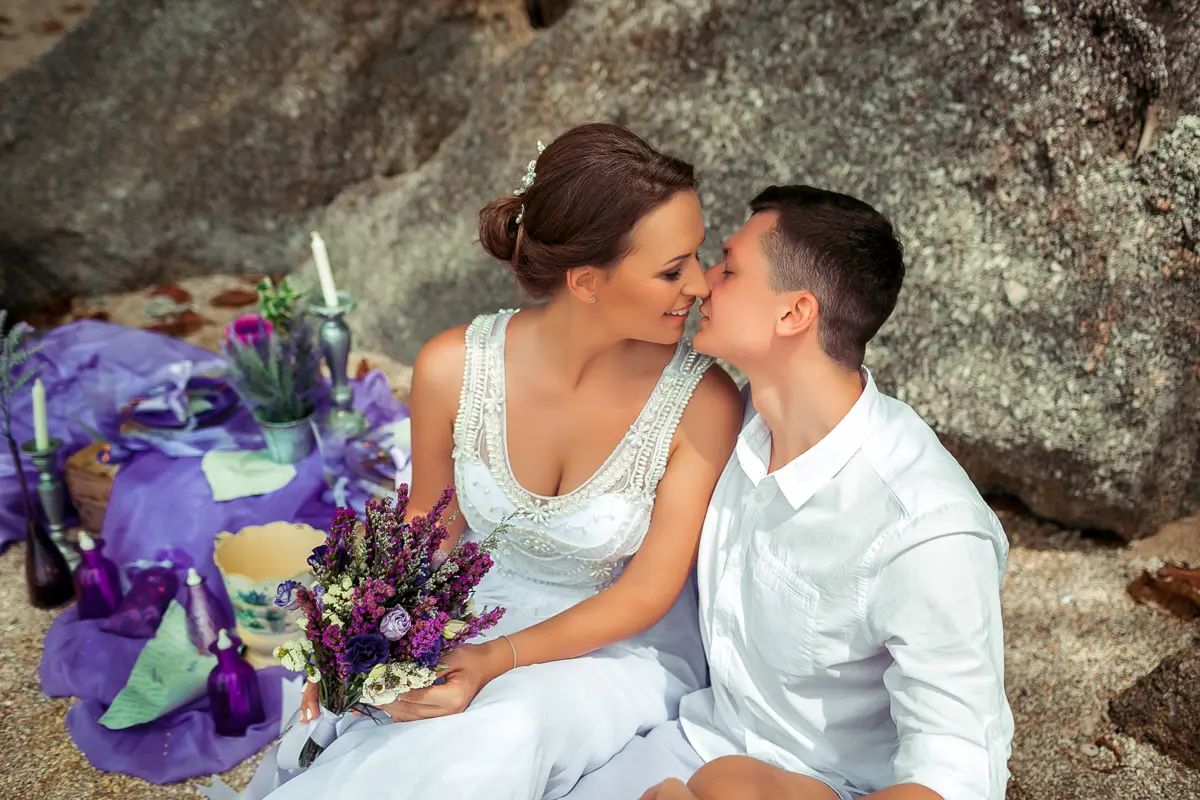
And this isn’t just theory. Checks happen regularly in Phuket: immigration police detain foreign photographers right on beaches and at temples during wedding and pre-wedding shoots. Local news reports on such cases all the time.
Why an illegal photographer is a risk for the client
A tourist who booked a shoot doesn’t face a fine. But the consequences are still unpleasant:
- The shoot can be stopped halfway through if a check begins.
- You may never get your photos if the photographer is detained or deported.
- There’s no one to get a refund from. An illegal photographer has no company, no contract and no accountability.
- A ruined day — especially painful if it’s a wedding or a proposal.
I wrote more about how to choose a photographer and avoid too-cheap offers in the article “How much does a photo shoot in Phuket cost”.
How to check that a photographer works legally
- Ask directly whether the photographer has a Thai work permit. An honest photographer will answer calmly.
- Check how long they’ve been working on the island and whether they have real reviews.
- Be wary if the price is several times lower than elsewhere: legal work simply can’t be very cheap.
I can help you work legally in Thailand
I’ve been through the whole process myself — from setting up a company to getting a work permit — and I know where the difficulties usually arise.
If you’re a photographer, videographer or another professional and want to work in Thailand legally, message me. I’ll tell you which options suit you, how much it will cost and where to start.
Frequently asked questions
Can a foreigner legally work as a photographer in Thailand?
Yes. You need a work visa and a work permit, which is obtained through a company in Thailand. You can’t work on a tourist visa or visa-exempt entry.
How much does it cost to work legally as a photographer in Thailand?
In my experience, the visa, the work permit and everything needed to keep them — the company, accounting, taxes and contributions — cost from 200,000 baht a year.
What is the fine for working without a work permit in Thailand?
Under the current law on foreign workers, a worker faces a fine of 5,000 to 50,000 baht. In practice, offenders can be deported and banned from entering the country. Employers face a fine for each illegal worker.
Can I work as a photographer in Thailand on a DTV or tourist visa?
No. A tourist visa and visa-exempt entry don’t give you the right to work at all. The DTV visa is designed for remote work for foreign clients and employers, not for providing services in Thailand, such as photographing tourists in Phuket.
Can you help me get a work permit?
Yes. I’ve been through this process myself and I help photographers and other professionals sort out their visa and work permit in Thailand. Message me and I’ll tell you where to start.
A Phuket photographer who works legally
If you’re planning a photo shoot or a wedding in Phuket, you can relax: I work officially, and no check will interrupt your shoot.
See the packages and prices on the price page, read the reviews and message me — I’ll suggest a location and time for your shoot.